Best Books for Self-Esteem & Self-Worth

Self-esteem isn’t fixed by “thinking more positively.”
It improves when shame reduces, self-criticism softens, and you build a more stable sense of identity and worth.

As a therapist, the books below are ones I consistently see make a difference. They are practical, grounded, and evidence-informed.

If you’re looking to genuinely strengthen your self-worth, start here.

What Makes a Good Self-Esteem Book?

The most effective books tend to:

  • Address shame (the real engine behind low self-worth)

  • Help reduce harsh self-criticism

  • Offer repeatable practices (not just insight)

  • Feel realistic and psychologically informed

  • Support identity development, not just “confidence boosts”

The books below meet those standards.

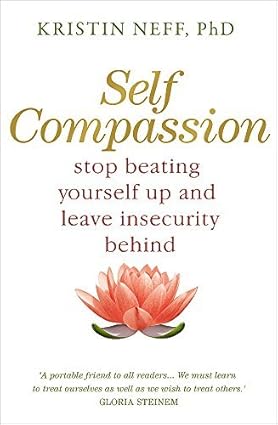
Self-Compassion – Kristin Neff

Best for: Harsh inner critic, chronic shame, never feeling good enough

If your self-esteem collapses the moment you make a mistake, this book is essential.

Most people try to build confidence first. That rarely works. The real issue is self-attack. If your internal dialogue is punishing, critical, or impossible to satisfy, your self-worth will always feel fragile.

This book teaches you how to interrupt that pattern.

Backed by solid research, Neff explains how self-compassion is not self-pity or weakness — it’s emotional regulation. When you stop attacking yourself, confidence becomes stable instead of forced.

If you’ve ever thought:

  • “Why am I so hard on myself?”

  • “Everyone else seems to cope better than me.”

  • “I should be better than this.”

Start here.

Self Compassion by kristin neff

Self Compassion

By Kristin Neff Self Compassion Paperback – 22 July 2011

View on Amazon →
The Six Pillars of Self-Esteem – Nathaniel Branden

Best for: People who want structure, clarity, and daily practices

This is less “feelings” and more framework.

If you want to understand what self-esteem is actually built from — and how to strengthen it consistently — this book lays it out clearly.

Branden breaks self-esteem into six behavioural pillars. That matters because self-worth grows from what you practice, not what you read once.

This is ideal if:

  • Your confidence depends on achievement.

  • You swing between over-performing and self-doubt.

  • You want something practical and structured.

It’s a classic for a reason.

Six Pillars of Self-Esteem by Nathaniel Branden

Six Pillars of Self-Esteem

A foundational book on self-esteem that explores the key practices that support healthy self-worth, with reflective exercises to help apply these ideas to everyday life.

View on Amazon →

Affiliate link — I may earn from qualifying purchases, at no extra cost to you.

The Gifts of Imperfection – Brené Brown

Best for: Perfectionism and comparison

If your self-worth rises and falls depending on how well you’re doing compared to others, this book hits the mark.

Brown’s work focuses on shame resilience and authenticity. In simple terms: learning to stop performing for acceptance.

If you:

  • Overthink how you come across

  • Feel “behind” in life

  • Struggle with comparison

  • Feel like you’re only lovable when you succeed

This book is both accessible and grounded in research.

The Gifts of Imperfection by Brené Brown paperback book cover

The Gifts of Imperfection

By Brené Brown – Research-driven guide to overcoming shame and perfectionism.

View on Amazon →
The Compassionate Mind – Paul Gilbert

Best for: Deep-rooted self-criticism and anxiety

If your low self-worth feels wired into your nervous system, this is a more in-depth psychological issue.

Gilbert explains how threat-based brain systems fuel shame and self-attack—and how compassion rebalances those systems.

This is ideal if:

  • You understand your patterns, but still feel stuck

  • Your self-criticism feels automatic

  • Anxiety and low self-esteem overlap

More detailed, but powerful.

The Compassionate Mind by Paul Gilbert paperback book cover

The Compassionate Mind

By Paul Gilbert – Evidence-based approach to reducing self-criticism.

View on Amazon →
You Are a Badass – Jen Sincero

Best for: Confidence boost and mindset reset

This one is less clinical and more motivational — but it converts well and works for people who feel stuck in self-doubt.

If someone feels:

  • Afraid to take risks

  • Held back by fear

  • Chronically under-confident

  • Stuck in “I’m not capable” thinking

This book is punchy, accessible, and energising. It’s not therapy-heavy, but it helps break inertia.

You Are a Badass by Jen Sincero paperback book cover

You Are a Badass

By Jen Sincero – How to Stop Doubting Your Greatness and Start Living an Awesome Life (John Murray One)

View on Amazon →
Worthy – Jamie Kern Lima

Best for: Believing you are enough

This book focuses directly on self-worth. It’s about letting go of the belief that you need to earn love, approval, or success.

If someone:

  • Feels fundamentally not enough

  • Overworks to feel worthy

  • Seeks validation externally

  • Doubts themselves despite achievements

This book speaks directly to that core wound.

It’s emotionally accessible and commercially strong — a good middle ground between therapy and mainstream appeal.

Worthy by Jamie Kern Lima hardcover book cover

Worthy By Jamie Kern Lima

How to Believe You Are Enough and Transform Your Life

View on Amazon →
The Confidence Gap – Russ Harris

Best for: Fear, avoidance, and performance anxiety

If someone’s self-esteem drops because they avoid difficult situations, this book is powerful.

Acceptance & Commitment Therapy (ACT) focuses on taking action despite fear rather than waiting to feel confident.

This is ideal if:

  • Confidence disappears under pressure

  • You overthink before acting

  • You want behavioural tools, not just insight

The Confidence Gap by Russ Harris

The Confidence Gap

An ACT-based workbook for people whose low confidence shows up as avoidance, overthinking, or fear of failure. Focuses on taking meaningful action rather than trying to feel confident first.

View on Amazon →

If You Prefer Practical Exercises

Some people benefit more from structured worksheets than theory.

If that’s you, see:
Best Workbooks for Low Self-Esteem 

For the broader psychological context behind self-esteem and identity, start here:
Self-Esteem, Identity & Relationships